
The Headline:
Reuters: Europe’s heatwaves expose insurance gap as business losses mount
#MemeLord #2Cents:
For years, global warming sat comfortably on the global agenda as an abstract, slow-moving compliance exercise. Corporate boards viewed ESG reports as PR exercises rather than urgent risk management priorities.
Today, that illusion is shattered. Recent severe heatwaves serve as the final wake-up call that rising temperatures are no longer a future concern: they represent a clear, present operational crisis.
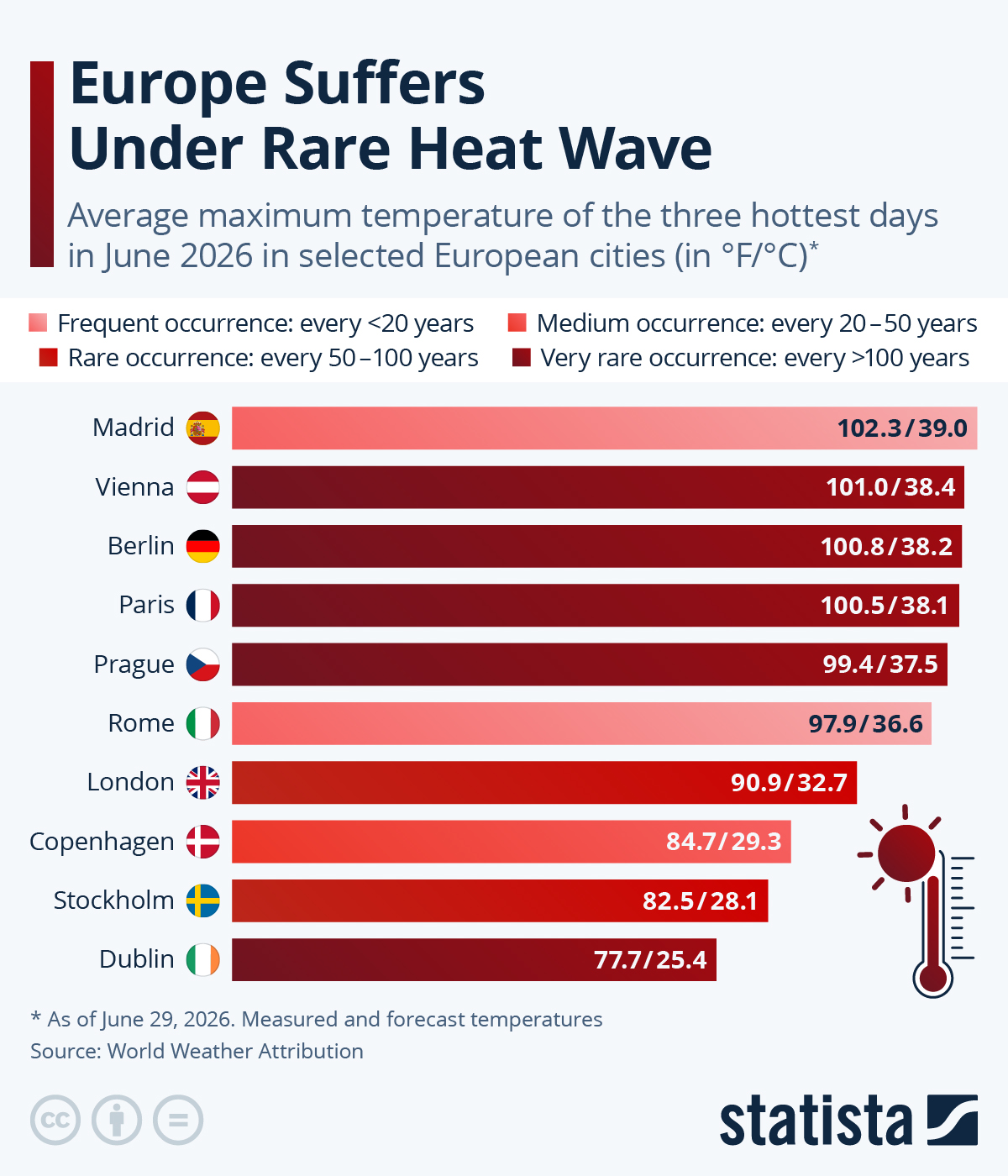
Look at the extreme temperatures recorded across hardest-hit regions over the past three months:
- Mali hit an agonizing 48.5°C
- Parts of India and Pakistan breached 47.2°C
- Mexicali in Mexico reached 52.4°C
- Southern Europe saw Spain and Greece surging past 44°C.
These are not just uncomfortable summer days; they are systemic stress tests. Risk management practitioners must immediately decouple heatwaves from generic climate risk and treat extreme heat as a standalone risk category requiring its own dedicated impact assessments.
The overall concern for business leaders is that extreme heat hits simultaneously across multiple sectors: physical infrastructure degrades, power grids face rolling blackouts, and human labor productivity plummets across manufacturing, logistics, and agriculture.
The business impact is immediate and severe. Heatwaves disrupt critical supply chains, force mandatory operational shutdowns, cause cooling costs to skyrocket, increase equipment failure rates, and trigger massive liability risks around employee health and safety.
THE BOTTOM LINE
If your enterprise risk matrix still treats extreme heat as an occasional weather anomaly, your organization is exposed.
Heat must be isolated, measured, and mitigated with tailored financial, operational, and regulatory frameworks before thermal stress destabilizes your core operations.
Leaders who act today to fortify infrastructure, protect human capital, and build resilient supply chains will weather the storm.
Those who continue to ignore the thermometer will watch their business models melt under pressure.
Sources and Credits
This publication contains information, data, and visual materials compiled from or referenced from:
- Reuters. Retrieved August 16, 2026, from reuters.com
- Statista. Retrieved June 30, 2026, from statista.com
All trademarks, copyrights, and intellectual property rights remain with their respective owners.
The article is also available on LinkedIn.
#MemeLord
Cybersecurity and IT Governance, Risk & Compliance (GRC) leader with experience across all Three Lines of Defence, covering cybersecurity governance, risk management, assurance, audit, and regulatory compliance.
He serves on the ISC2 Chapter Advisory Committee and is a former Board Member of ISC2 Malaysia Chapter. Robin is also a Chartered Member of IIA Malaysia and a member of ISACA, DRII, MTSFB, and PIKOM.
Currently serving as Head of IT GRC at a public-listed telecommunications and digital infrastructure provider, he helps organizations strengthen cyber resilience, technology risk management, and compliance. Through his #MemeLord persona, Robin makes complex cybersecurity and GRC topics practical, relatable, and engaging for the wider community.
Robin Yong Hong Cheng