

Resilience does not refer solely to the ability to avoid damage. It is the strength to face reality head-on even after suffering damage, to support people and communities, and to rise again.
The 2026 Kumamoto Earthquake, which struck on July 28, forced us to confront the weight of this definition. Even one of the companies that had taken disaster preparedness and business continuity most seriously still suffered severe damage. So, were those preparations in vain? The answer is no. In this article, I would like to explore the essence of “resilience”—a capability now being demanded of companies—by examining the cases of the affected companies.
What Happened
The 2026 Kumamoto Earthquake recorded a maximum seismic intensity of 7 (the highest on Japan’s seismic intensity scale) in Uki City and Hikawa Town, Kumamoto Prefecture, causing extensive damage that recalled the 2016 Kumamoto Earthquake.
At Aeon Mall Kumamoto, which had been designated as a regional disaster-response hub, a massive explosion occurred around 5:50 p.m. on the day of the disaster. The second floor of the building and part of the exterior wall collapsed, trapping numerous employees. As of July 30, at least seven deaths had been confirmed; all of the victims are believed to have been employees of specialty store tenants. Rescue operations took place amid continuing aftershocks.
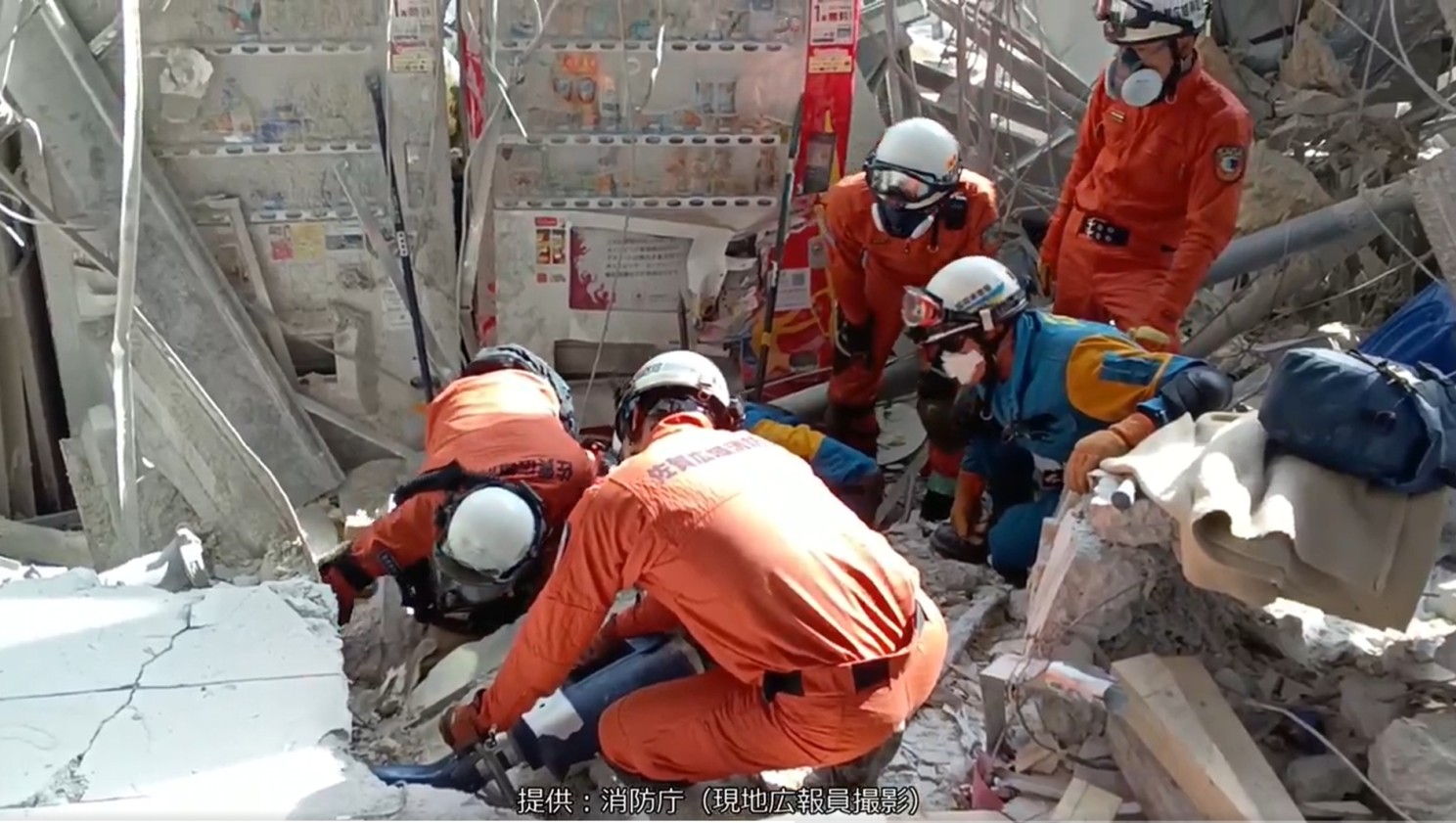
The cause of the explosion is still under investigation (Aeon explained at a press conference that it is proceeding with the investigation, including the possibility of a gas explosion). Depending on what the cause turns out to be, the lessons to be drawn from this accident may vary. However, the main point of this article holds true regardless of the cause. That point is the question: “How should a company behave after serious damage has occurred?”
Aeon’s Track Record
Aeon is known as a company that has consistently prioritized disaster preparedness and business continuity management (BCM)—the ongoing management discipline that encompasses not only a business continuity plan (BCP) as a document, but also training, review, and coordination across the supply chain.
I visited Aeon while covering the 2016 Kumamoto Earthquake, about ten years ago. At that time, the Aeon Kumamoto store sustained damage such as falling ceiling materials and broken sprinkler pipes. However, rather than suspending operations entirely, the company utilized its large parking lot to continue outdoor sales and opened the parking lot to residents who could not return home due to aftershocks.

At headquarters, a Group Response Headquarters was established approximately 30 minutes after the disaster struck, and information sharing with the site began via teleconference. Using its proprietary safety confirmation system, the company verified the safety of tens of thousands of employees. Furthermore, it dispatched approximately 1,100 support staff from group companies nationwide to provide personnel assistance—including pharmacists and childcare workers—and, in collaboration with the Self-Defense Forces and logistics providers, delivered approximately 5.29 million items of relief supplies and goods to the disaster-stricken areas.
Even before the Great East Japan Earthquake of 2011, the company had been conducting comprehensive disaster preparedness drills twice a year, with approximately 450,000 participants. The company has also accumulated experience through no-notice (“blind”) executive drills—in which scenarios are not disclosed in advance—as well as joint drills with the Self-Defense Forces and logistics providers. With a “BCP Portal” system for supply chain information sharing, a real-time information aggregation system, a large-scale safety confirmation system, and comprehensive partnership agreements with local governments, the company’s BCM stands among the most advanced in Japan.
That is precisely why this incident poses a serious question to all companies and stakeholders involved in disaster preparedness and business continuity.
Seriously Confronting “Residual Risk”
In risk management, there is a concept known as “residual risk.” This refers to the risk that remains, no matter how many countermeasures are taken, and cannot be reduced to zero. This incident should not be called a “failure of preparedness.” Rather, a risk that remained despite preparations has materialized in the worst possible way.
This distinction is not mere semantics. If we conclude that “preparations were in vain,” society will stop preparing altogether. If we conclude that “residual risk has materialized,” we can move on to the next question: What can be done to further reduce residual risk? And, if damage still occurs despite these efforts, how should we respond?
Lost Lives Cannot Be Brought Back
However, intellectually understanding this distinction is one thing; coming to terms with reality is quite another.
Once a human life is lost, the pain is beyond words. Management, supervisors, and every single employee will continue to grapple with the questions: “Why couldn’t we have prevented this?” and “Could we have done more?” For the bereaved families, it does not matter how earnestly the company has worked on disaster preparedness. Lost lives cannot be brought back.
There is another issue that this accident has brought to light. All of the victims are believed to have been employees of tenant businesses. Commercial facilities employ a large number of workers who are not directly hired by the facility operator. Regardless of the employment relationship, how should the duty of care be fulfilled toward everyone working within the facility? Are employees of tenants and subcontractors falling through the cracks in disaster drills and safety confirmation systems? This is a challenge common to all large-scale facilities across Japan.
A Company’s True Worth Is Tested in the Wake of a Disaster
Immediately after the disaster struck, Aeon’s president went to the disaster area and held a press conference. What he clearly stated there was not the resumption of operations or minimizing the impact on business performance, but rather that “saving human lives is the top priority.”
What is noteworthy is the substance of this response: the top executive personally being on the ground; providing prompt and transparent explanations to the public without concealment; and, in the midst of the crisis, articulating the organization’s priorities in a single sentence. The company’s response embodied the principles repeatedly affirmed in the field of crisis communication—promptness, transparency, empathy, and action. It can be said that the BCM philosophy cultivated over many years was manifested in the most severe of circumstances.
Whether damage can be completely prevented is not determined by a company’s capabilities alone. However, how a company behaves after damage occurs is determined by its will. How quickly can it assess the situation, make decisions, and maintain the trust of its employees, customers, and society? A company’s true worth is tested precisely here.
Collective Resilience: From “Preparing Our Own Company” to “Preparing Our Network”
In an increasingly complex society, there is another important perspective to consider when enhancing resilience. It means reframing resilience not as the capability of a single company, but as a strength demonstrated through collaboration among different organizations.
All of the victims at Aeon Mall Kumamoto are believed to have been employees of tenant companies. In commercial facilities, many workers are employed by parties other than the facility operator. Regardless of the employment relationship, how can the duty of care be fulfilled for everyone working within the facility? Are employees of tenants and subcontractors being left in “blind spots” when it comes to disaster drills and safety confirmation systems?
The same logic extends beyond commercial facilities. In manufacturing and other industries, the impact of a disaster striking a single company today spreads instantly—both domestically and internationally—through the supply chain. This trend has become increasingly pronounced with each passing year since the Great East Japan Earthquake. No matter how well a company prepares, its operations will grind to a halt if a connected partner collapses. Conversely, a company’s shutdown directly impacts the jobs of its business partners and the local community.
In other words, modern resilience cannot be achieved through a company’s own preparations alone. Building relationships across organizational boundaries in normal times—joint drills involving facility operators and tenants, information sharing and mutual support throughout the supply chain, and cooperation agreements with local governments and communities—is the practice of collective resilience.
Redefining Resilience
Here, I would like to return to the definition given at the beginning. Resilience in the context of business continuity is understood as a multifaceted capability to anticipate crises, absorb shocks, adapt to circumstances, and recover.
In other words, preparedness to minimize damage and the strength to bounce back after suffering damage are not mutually exclusive. They are two sides of the same capability. Aeon’s accumulated training and systems embodied the former, while its post-disaster response embodied the latter.

Resilience is not merely the ability to avoid damage. It is the strength to endure damage and, even when faced with the worst-case scenario, to refuse to turn a blind eye to reality, to support people and the community, and to rise again. The recent accident at Aeon Mall Kumamoto is not an event that highlights the “limitations” of disaster preparedness and business continuity. Rather, it confronts us with a fundamental challenge: even companies that have prepared earnestly can still suffer damage—and the question is how to demonstrate resilience in such moments.
Over the past 20 years, Japanese companies’ disaster preparedness and ability to implement business continuity plans have steadily improved. The true value of these efforts will be put to the test during the recovery and reconstruction process that is about to begin.
Preparedness could not reduce the damage to zero. But preparedness was not in vain. The response headquarters activated within 30 minutes, the system that confirmed the safety of tens of thousands of employees, a president who could immediately say that lives come first—all of this was built upon the groundwork laid in normal times. Getting back on one’s feet even after sustaining damage, and growing into an organization stronger than before—this earthquake is once again challenging society to consider the true meaning of corporate resilience.
Source: Risk Taisaku.com, July 30, 2016
Managing Director, Shinken Press Co., Ltd. / Editor-in-Chief, Risktaisaku.com
PhD and Visiting Researcher at the University of Hyogo.
In 2007, he founded Risk Taisaku.com, a leading Japanese publication specializing in crisis management and business continuity (BCP).
He has interviewed and analyzed more than 500 companies on BCP and resilience practices.
He has served as an advisor and committee member for multiple Japanese Cabinet Office initiatives, including business continuity management, community disaster preparedness, and disaster education programs.
Kosuke Nakazawa
